1
2
3
4
5
6
7
8
9
10
11
12
13
14
15
16
17
18
19
20
21
22
23
24
25
26
27
28
29
30
31
32
33
34
35
36
37
38
39
40
41
42
43
44
45
46
47
48
49
50
51
52
53
54
55
56
57
58
59
60
61
62
63
64
65
66
67
68
69
70
71
72
73
74
75
76
77
78
79
80
81
82
83
84
85
86
87
88
89
90
91
92
93
94
95
96
97
98
99
100
101
102
103
104
105
106
107
108
109
110
111
112
113
114
115
116
117
118
119
120
121
122
123
124
125
126
127
128
129
130
131
132
133
134
135
136
137
138
139
140
141
142
143
144
145
146
147
148
149
150
151
152
153
154
155
156
157
158
159
160
161
162
163
164
165
166
167
168
169
170
171
172
173
174
175
176
177
178
179
180
181
182
183
184
185
186
187
188
189
190
191
192
193
194
195
196
197
198
199
200
201
202
203
204
205
206
207
208
209
210
211
212
213
214
215
216
217
218
219
220
221
222
223
224
225
226
227
228
229
230
231
232
233
234
235
236
237
238
239
240
241
242
243
244
245
246
247
248
249
250
251
252
253
254
255
256
257
258
259
260
261
262
263
264
265
266
267
268
269
270
271
272
273
274
275
276
277
278
279
280
281
282
283
284
285
286
287
288
289
290
291
292
293
294
295
296
297
298
299
300
301
302
303
304
305
306
307
308
309
310
311
312
313
|
%global _empty_manifest_terminate_build 0
Name: python-dramatiq-dashboard
Version: 0.4.0
Release: 1
Summary: A dashboard for Dramatiq (Redis-only!).
License: GNU Lesser General Public License v3 or later (LGPLv3+)
URL: https://pypi.org/project/dramatiq-dashboard/
Source0: https://mirrors.aliyun.com/pypi/web/packages/3e/23/6735768b891416cfc1ccacb800f445640755819d68fad0f5a3b89403b187/dramatiq_dashboard-0.4.0.tar.gz
BuildArch: noarch
Requires: python3-dramatiq[redis]
Requires: python3-jinja2
Requires: python3-redis
Requires: python3-dataclasses
Requires: python3-alabaster
Requires: python3-sphinx
Requires: python3-sphinxcontrib-napoleon
Requires: python3-flake8
Requires: python3-flake8-bugbear
Requires: python3-flake8-quotes
Requires: python3-isort
Requires: python3-bumpversion
Requires: python3-hiredis
Requires: python3-twine
Requires: python3-wheel
Requires: python3-pytest
Requires: python3-pytest-benchmark[histogram]
Requires: python3-pytest-cov
Requires: python3-tox
%description
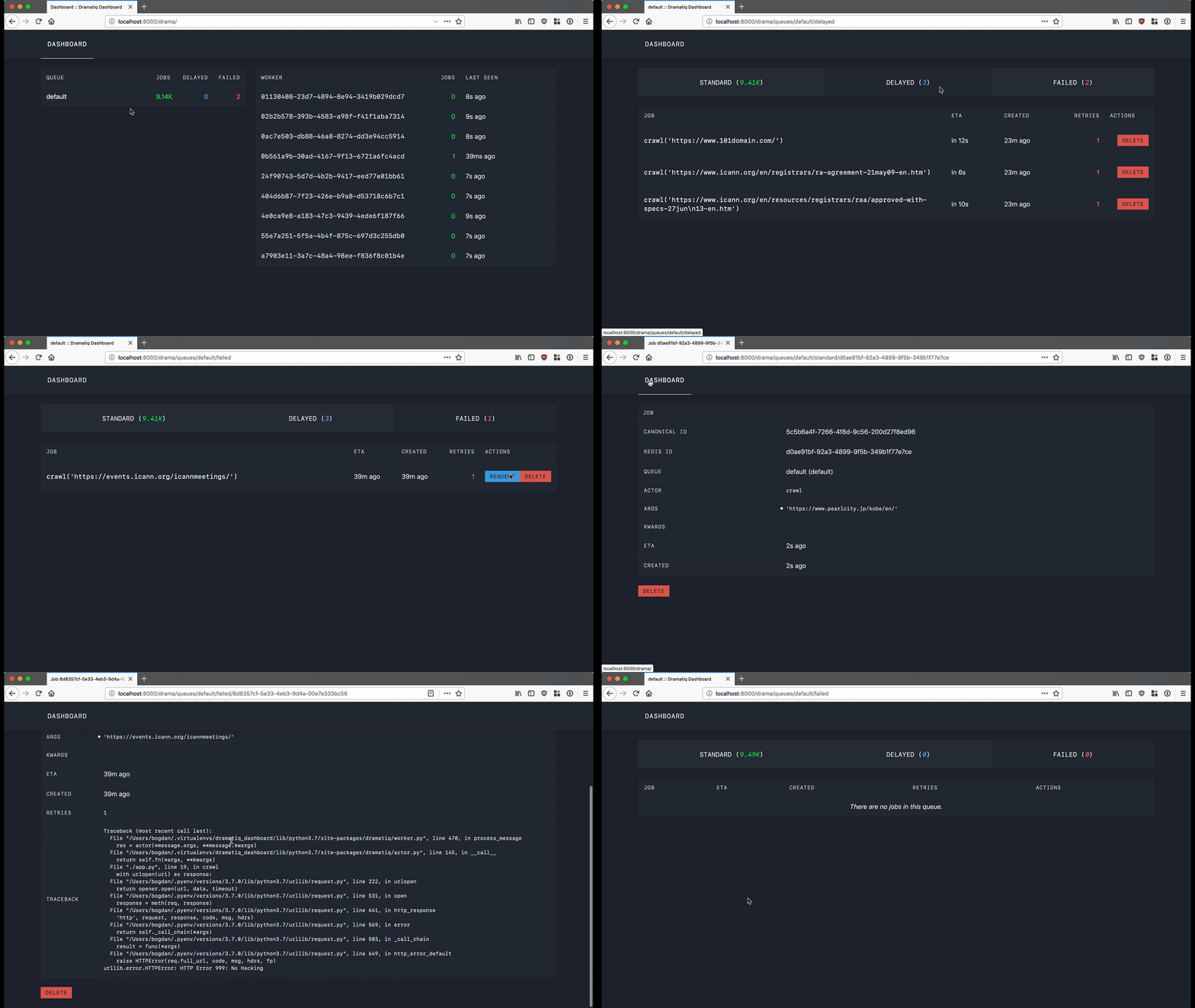
# dramatiq_dashboard
A dashboard for [dramatiq], specific to its Redis broker (sorry
RabbitMQ users!). Very alpha stuff.
It comes in the form of a WSGI middleware, with as few dependencies as
possible (`dramatiq`, `jinja2` and `redis`) so it's super easy to plug
into whatever web application you have.
## Installation
pip install dramatiq_dashboard
## Quickstart
#### Run the dashboard on top of an existing WSGI app
```python
# Assuming at some point you instantiate your app.
app = create_wsgi_application()
# Import the library, create the middleware and wrap your app with it.
import dramatiq_dashboard
dashboard_middleware = dramatiq_dashboard.make_wsgi_middleware("/drama")
app = dashboard_middleware(app)
```
Run your app, visit `/drama` and you should see the dashboard.
#### Run the dashboard as a standalone webserver
If you don't want to wrap an existing WSGI app, you can also run the
dashboard as a standalone server. Install the WSGI server of your
choice (e.g. uWSGi, gunicorn, bjoern, etc), setup the Redis broker,
and then start `DashboardApp` directly.
For example, to serve the dashboard on `http://127.0.0.1:8080` using
the `bjoern` WSGI server and a redis server on `17.0.0.1:6379`, run
the following:
```python
import bjoern
import dramatiq
from dramatiq.brokers.redis import RedisBroker
from dramatiq_dashboard import DashboardApp
broker = RedisBroker(host="127.0.0.1", port=6379)
broker.declare_queue("default")
dramatiq.set_broker(broker)
app = DashboardApp(broker=broker, prefix="")
bjoern.run(app, "127.0.0.1", 8080)
```
Then visit http://127.0.0.1:8080/ to see the running dashboard.
*Note that if you use custom queues in your application, they won't be
discovered using this approach. You'll have to either add each one of
them manually to your broker or import and pass your application's
broker to `DashboardApp`.*
## License
dramatiq_dashboard is licensed under the LGPL. Please see [COPYING]
and [COPYING.LESSER] for licensing details.
[COPYING.LESSER]: https://github.com/Bogdanp/dramatiq_dashboard/blob/master/COPYING.LESSER
[COPYING]: https://github.com/Bogdanp/dramatiq_dashboard/blob/master/COPYING
[dramatiq]: https://dramatiq.io
%package -n python3-dramatiq-dashboard
Summary: A dashboard for Dramatiq (Redis-only!).
Provides: python-dramatiq-dashboard
BuildRequires: python3-devel
BuildRequires: python3-setuptools
BuildRequires: python3-pip
%description -n python3-dramatiq-dashboard
# dramatiq_dashboard
A dashboard for [dramatiq], specific to its Redis broker (sorry
RabbitMQ users!). Very alpha stuff.
It comes in the form of a WSGI middleware, with as few dependencies as
possible (`dramatiq`, `jinja2` and `redis`) so it's super easy to plug
into whatever web application you have.

## Installation
pip install dramatiq_dashboard
## Quickstart
#### Run the dashboard on top of an existing WSGI app
```python
# Assuming at some point you instantiate your app.
app = create_wsgi_application()
# Import the library, create the middleware and wrap your app with it.
import dramatiq_dashboard
dashboard_middleware = dramatiq_dashboard.make_wsgi_middleware("/drama")
app = dashboard_middleware(app)
```
Run your app, visit `/drama` and you should see the dashboard.
#### Run the dashboard as a standalone webserver
If you don't want to wrap an existing WSGI app, you can also run the
dashboard as a standalone server. Install the WSGI server of your
choice (e.g. uWSGi, gunicorn, bjoern, etc), setup the Redis broker,
and then start `DashboardApp` directly.
For example, to serve the dashboard on `http://127.0.0.1:8080` using
the `bjoern` WSGI server and a redis server on `17.0.0.1:6379`, run
the following:
```python
import bjoern
import dramatiq
from dramatiq.brokers.redis import RedisBroker
from dramatiq_dashboard import DashboardApp
broker = RedisBroker(host="127.0.0.1", port=6379)
broker.declare_queue("default")
dramatiq.set_broker(broker)
app = DashboardApp(broker=broker, prefix="")
bjoern.run(app, "127.0.0.1", 8080)
```
Then visit http://127.0.0.1:8080/ to see the running dashboard.
*Note that if you use custom queues in your application, they won't be
discovered using this approach. You'll have to either add each one of
them manually to your broker or import and pass your application's
broker to `DashboardApp`.*
## License
dramatiq_dashboard is licensed under the LGPL. Please see [COPYING]
and [COPYING.LESSER] for licensing details.
[COPYING.LESSER]: https://github.com/Bogdanp/dramatiq_dashboard/blob/master/COPYING.LESSER
[COPYING]: https://github.com/Bogdanp/dramatiq_dashboard/blob/master/COPYING
[dramatiq]: https://dramatiq.io
%package help
Summary: Development documents and examples for dramatiq-dashboard
Provides: python3-dramatiq-dashboard-doc
%description help
# dramatiq_dashboard
A dashboard for [dramatiq], specific to its Redis broker (sorry
RabbitMQ users!). Very alpha stuff.
It comes in the form of a WSGI middleware, with as few dependencies as
possible (`dramatiq`, `jinja2` and `redis`) so it's super easy to plug
into whatever web application you have.

## Installation
pip install dramatiq_dashboard
## Quickstart
#### Run the dashboard on top of an existing WSGI app
```python
# Assuming at some point you instantiate your app.
app = create_wsgi_application()
# Import the library, create the middleware and wrap your app with it.
import dramatiq_dashboard
dashboard_middleware = dramatiq_dashboard.make_wsgi_middleware("/drama")
app = dashboard_middleware(app)
```
Run your app, visit `/drama` and you should see the dashboard.
#### Run the dashboard as a standalone webserver
If you don't want to wrap an existing WSGI app, you can also run the
dashboard as a standalone server. Install the WSGI server of your
choice (e.g. uWSGi, gunicorn, bjoern, etc), setup the Redis broker,
and then start `DashboardApp` directly.
For example, to serve the dashboard on `http://127.0.0.1:8080` using
the `bjoern` WSGI server and a redis server on `17.0.0.1:6379`, run
the following:
```python
import bjoern
import dramatiq
from dramatiq.brokers.redis import RedisBroker
from dramatiq_dashboard import DashboardApp
broker = RedisBroker(host="127.0.0.1", port=6379)
broker.declare_queue("default")
dramatiq.set_broker(broker)
app = DashboardApp(broker=broker, prefix="")
bjoern.run(app, "127.0.0.1", 8080)
```
Then visit http://127.0.0.1:8080/ to see the running dashboard.
*Note that if you use custom queues in your application, they won't be
discovered using this approach. You'll have to either add each one of
them manually to your broker or import and pass your application's
broker to `DashboardApp`.*
## License
dramatiq_dashboard is licensed under the LGPL. Please see [COPYING]
and [COPYING.LESSER] for licensing details.
[COPYING.LESSER]: https://github.com/Bogdanp/dramatiq_dashboard/blob/master/COPYING.LESSER
[COPYING]: https://github.com/Bogdanp/dramatiq_dashboard/blob/master/COPYING
[dramatiq]: https://dramatiq.io
%prep
%autosetup -n dramatiq_dashboard-0.4.0
%build
%py3_build
%install
%py3_install
install -d -m755 %{buildroot}/%{_pkgdocdir}
if [ -d doc ]; then cp -arf doc %{buildroot}/%{_pkgdocdir}; fi
if [ -d docs ]; then cp -arf docs %{buildroot}/%{_pkgdocdir}; fi
if [ -d example ]; then cp -arf example %{buildroot}/%{_pkgdocdir}; fi
if [ -d examples ]; then cp -arf examples %{buildroot}/%{_pkgdocdir}; fi
pushd %{buildroot}
if [ -d usr/lib ]; then
find usr/lib -type f -printf "\"/%h/%f\"\n" >> filelist.lst
fi
if [ -d usr/lib64 ]; then
find usr/lib64 -type f -printf "\"/%h/%f\"\n" >> filelist.lst
fi
if [ -d usr/bin ]; then
find usr/bin -type f -printf "\"/%h/%f\"\n" >> filelist.lst
fi
if [ -d usr/sbin ]; then
find usr/sbin -type f -printf "\"/%h/%f\"\n" >> filelist.lst
fi
touch doclist.lst
if [ -d usr/share/man ]; then
find usr/share/man -type f -printf "\"/%h/%f.gz\"\n" >> doclist.lst
fi
popd
mv %{buildroot}/filelist.lst .
mv %{buildroot}/doclist.lst .
%files -n python3-dramatiq-dashboard -f filelist.lst
%dir %{python3_sitelib}/*
%files help -f doclist.lst
%{_docdir}/*
%changelog
* Thu Jun 08 2023 Python_Bot <Python_Bot@openeuler.org> - 0.4.0-1
- Package Spec generated
|
