1
2
3
4
5
6
7
8
9
10
11
12
13
14
15
16
17
18
19
20
21
22
23
24
25
26
27
28
29
30
31
32
33
34
35
36
37
38
39
40
41
42
43
44
45
46
47
48
49
50
51
52
53
54
55
56
57
58
59
60
61
62
63
64
65
66
67
68
69
70
71
72
73
74
75
76
77
78
79
80
81
82
83
84
85
86
87
88
89
90
91
92
93
94
95
96
97
98
99
100
101
102
103
104
105
106
107
108
109
110
111
112
113
114
115
116
117
118
119
120
121
122
123
124
125
126
127
128
129
130
131
132
133
134
135
136
137
138
139
140
141
142
143
144
145
146
147
148
149
150
151
152
153
154
155
156
157
158
159
160
161
162
163
164
165
166
167
168
169
170
171
172
173
174
175
176
177
178
179
180
181
182
183
184
185
186
187
188
189
190
191
192
193
194
195
196
197
198
199
200
201
202
203
204
205
206
207
208
209
210
211
212
213
214
215
216
217
218
219
220
221
222
223
224
225
226
227
228
229
230
231
232
233
234
235
236
237
238
239
240
241
242
243
244
245
246
247
248
249
250
251
252
253
254
255
256
257
258
259
260
261
262
263
264
265
266
267
268
269
270
271
272
273
274
275
276
277
278
279
280
281
282
283
284
285
286
287
288
289
290
291
292
293
294
295
296
297
298
299
300
301
302
303
304
305
306
307
308
309
310
311
312
313
314
315
316
317
318
319
320
321
322
323
324
325
326
327
328
329
330
331
332
333
334
335
336
337
338
339
340
341
342
343
344
345
346
347
348
349
350
351
352
353
354
355
356
357
358
359
360
361
362
363
364
365
366
367
368
369
370
371
372
373
374
375
376
377
378
379
380
381
382
383
384
385
386
387
388
389
|
%global _empty_manifest_terminate_build 0
Name: python-qsAPI
Version: 2.2.0
Release: 1
Summary: qsAPI - a client for Qlik Sense QPS and QRS interfaces
License: MIT License
URL: https://github.com/rafael-sanz/qsAPI
Source0: https://mirrors.nju.edu.cn/pypi/web/packages/8f/58/5127ab0965890f90e134f4fe5df83fd3752f35e7968c46ba3a6e47cff386/qsAPI-2.2.0.tar.gz
BuildArch: noarch
Requires: python3-requests
Requires: python3-requests-ntlm
%description
## About
qsAPI is a client for Qlik Sense QPS and QRS interfaces written in python that provides an environment for managing a Qlik Sense site via programming or interactive console. The module provides a set of commands for viewing and editing configuration settings, as well as managing tasks and other features available through APIs.
## Installation
You could use your preferred IDE (Eclipse, Visual Code, NetBeans, etc.) with the python interpreter 3.x or directly in console. Take a look at (https://www.python.org). Once the module is loaded you can view a list of available commands with the autocomplete tooltips.
Just execute in the command line (libraries and dependencies will be installed):
```python
pip install qsAPI
```
Optionally, if you plan connect using NTLM authentication, then append optional target.
```python
pip install qsAPI[ntlm]
```
Now, the module can be used just importing qsAPI.py at the beginning of your python script or console, the module will then be loaded and ready to use.
```python
>>> import qsAPI
```
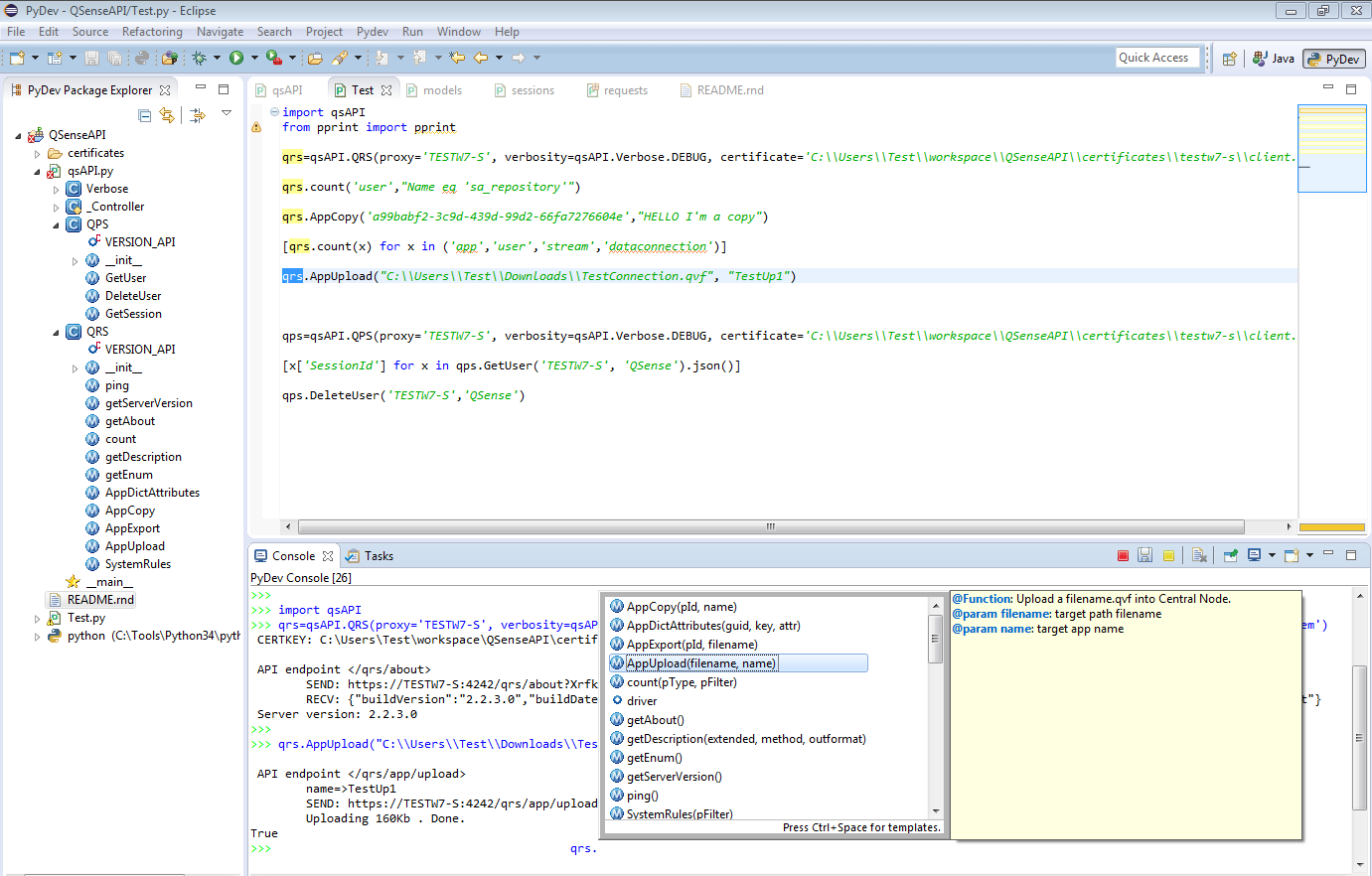
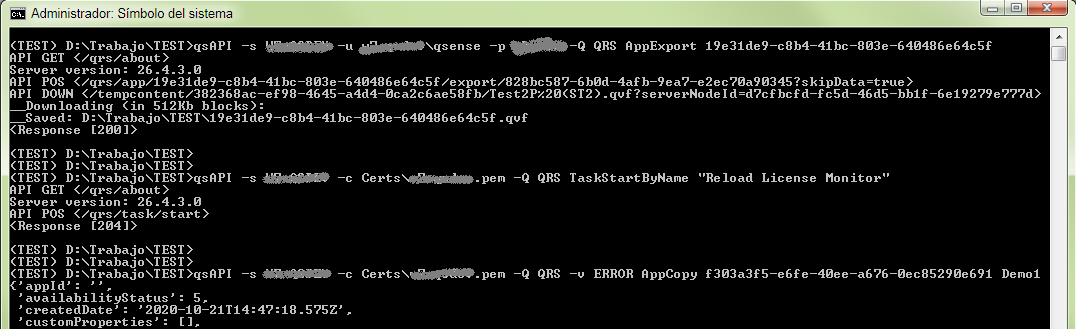
Or just a simple command line console if complex scripts are no needed:
## Usage
### Connecting with certificates
The first step is to build a handler invoking the constructor of the class you will use containing the host parameters, this will attempt to connect to the Qlik Sense server. Just export previously from QlikSense console the certificate in portable format and copy the folder in your machine:
```python
>>> qrs=qsAPI.QRS(proxy='hostname', certificate='path\\client.pem')
```
### Connecting with windows credentials (NTLM)
Alternatively, the constructor accept user credentials via arguments.
```python
>>> qrs=qsAPI.QRS(proxy='hostname', user=('yor_domain','username','password'))
```
## Examples
#### Count users using a filter
```python
qrs.count('user',"Name eq 'sa_repository'")
```
#### Duplicate an application in the server
```python
qrs.AppCopy('a99babf2-3c9d-439d-99d2-66fa7276604e',"HELLO world")
```
#### Export an application
```python
qrs.AppExport('a99babf2-3c9d-439d-99d2-66fa7276604e',"c:\\path\\myAppName.qvf")
```
#### Export all published applications to directories
```python
for app in qrs.AppGet(pFilter="stream.name ne 'None'"):
os.makedirs(app['stream']['name'], exist_ok=True)
qrs.AppExport(app['id'], app['stream']['name']+'\\'+app['name'])
```
#### Retrieve security rules using a filter
```python
qrs.SystemRulesGet("type eq 'Custom'")
```
#### Retrieve a list of sessions for a user
```python
[x['SessionId'] for x in qps.GetUser('DIR', 'name').json()]
```
#### teardown of all connections for the user and related sessions
```python
qps.DeleteUser('DIR','name')
```
##### More examples
Take a look at the Wiki area: (https://github.com/rafael-sanz/qsAPI/wiki)
## Command Line
Alternative use as command line is available too, examples:
```
qsAPI --help
qsAPI -s myServer -c dir/client.pem -Q QRS TaskStartbyName "Reload License Monitor"
qsAPI -s myServer -c dir/client.pem -Q QRS -v INFO AppExport d8b120d7-a6e4-42ff-90b2-2ac6a3d92233
qsAPI -s myServer -c dir/client.pem -Q QRS -v INFO AppReload 79f0c591-67de-4ded-91ae-4865934a5746
```
## TODO
The module is in progress, a subset of methods are implemented. But all the endpoints could be implemented through the inner class `driver` and the methods `get, post, put, delete`.
```python
qps.driver.get('/qrs/about/api/enums')
```
## License
This software is made available "AS IS" without warranty of any kind. Qlik support agreement does not cover support for this software.
%package -n python3-qsAPI
Summary: qsAPI - a client for Qlik Sense QPS and QRS interfaces
Provides: python-qsAPI
BuildRequires: python3-devel
BuildRequires: python3-setuptools
BuildRequires: python3-pip
%description -n python3-qsAPI
## About
qsAPI is a client for Qlik Sense QPS and QRS interfaces written in python that provides an environment for managing a Qlik Sense site via programming or interactive console. The module provides a set of commands for viewing and editing configuration settings, as well as managing tasks and other features available through APIs.
## Installation
You could use your preferred IDE (Eclipse, Visual Code, NetBeans, etc.) with the python interpreter 3.x or directly in console. Take a look at (https://www.python.org). Once the module is loaded you can view a list of available commands with the autocomplete tooltips.
Just execute in the command line (libraries and dependencies will be installed):
```python
pip install qsAPI
```
Optionally, if you plan connect using NTLM authentication, then append optional target.
```python
pip install qsAPI[ntlm]
```
Now, the module can be used just importing qsAPI.py at the beginning of your python script or console, the module will then be loaded and ready to use.
```python
>>> import qsAPI
```

Or just a simple command line console if complex scripts are no needed:

## Usage
### Connecting with certificates
The first step is to build a handler invoking the constructor of the class you will use containing the host parameters, this will attempt to connect to the Qlik Sense server. Just export previously from QlikSense console the certificate in portable format and copy the folder in your machine:
```python
>>> qrs=qsAPI.QRS(proxy='hostname', certificate='path\\client.pem')
```
### Connecting with windows credentials (NTLM)
Alternatively, the constructor accept user credentials via arguments.
```python
>>> qrs=qsAPI.QRS(proxy='hostname', user=('yor_domain','username','password'))
```
## Examples
#### Count users using a filter
```python
qrs.count('user',"Name eq 'sa_repository'")
```
#### Duplicate an application in the server
```python
qrs.AppCopy('a99babf2-3c9d-439d-99d2-66fa7276604e',"HELLO world")
```
#### Export an application
```python
qrs.AppExport('a99babf2-3c9d-439d-99d2-66fa7276604e',"c:\\path\\myAppName.qvf")
```
#### Export all published applications to directories
```python
for app in qrs.AppGet(pFilter="stream.name ne 'None'"):
os.makedirs(app['stream']['name'], exist_ok=True)
qrs.AppExport(app['id'], app['stream']['name']+'\\'+app['name'])
```
#### Retrieve security rules using a filter
```python
qrs.SystemRulesGet("type eq 'Custom'")
```
#### Retrieve a list of sessions for a user
```python
[x['SessionId'] for x in qps.GetUser('DIR', 'name').json()]
```
#### teardown of all connections for the user and related sessions
```python
qps.DeleteUser('DIR','name')
```
##### More examples
Take a look at the Wiki area: (https://github.com/rafael-sanz/qsAPI/wiki)
## Command Line
Alternative use as command line is available too, examples:
```
qsAPI --help
qsAPI -s myServer -c dir/client.pem -Q QRS TaskStartbyName "Reload License Monitor"
qsAPI -s myServer -c dir/client.pem -Q QRS -v INFO AppExport d8b120d7-a6e4-42ff-90b2-2ac6a3d92233
qsAPI -s myServer -c dir/client.pem -Q QRS -v INFO AppReload 79f0c591-67de-4ded-91ae-4865934a5746
```
## TODO
The module is in progress, a subset of methods are implemented. But all the endpoints could be implemented through the inner class `driver` and the methods `get, post, put, delete`.
```python
qps.driver.get('/qrs/about/api/enums')
```
## License
This software is made available "AS IS" without warranty of any kind. Qlik support agreement does not cover support for this software.
%package help
Summary: Development documents and examples for qsAPI
Provides: python3-qsAPI-doc
%description help
## About
qsAPI is a client for Qlik Sense QPS and QRS interfaces written in python that provides an environment for managing a Qlik Sense site via programming or interactive console. The module provides a set of commands for viewing and editing configuration settings, as well as managing tasks and other features available through APIs.
## Installation
You could use your preferred IDE (Eclipse, Visual Code, NetBeans, etc.) with the python interpreter 3.x or directly in console. Take a look at (https://www.python.org). Once the module is loaded you can view a list of available commands with the autocomplete tooltips.
Just execute in the command line (libraries and dependencies will be installed):
```python
pip install qsAPI
```
Optionally, if you plan connect using NTLM authentication, then append optional target.
```python
pip install qsAPI[ntlm]
```
Now, the module can be used just importing qsAPI.py at the beginning of your python script or console, the module will then be loaded and ready to use.
```python
>>> import qsAPI
```

Or just a simple command line console if complex scripts are no needed:

## Usage
### Connecting with certificates
The first step is to build a handler invoking the constructor of the class you will use containing the host parameters, this will attempt to connect to the Qlik Sense server. Just export previously from QlikSense console the certificate in portable format and copy the folder in your machine:
```python
>>> qrs=qsAPI.QRS(proxy='hostname', certificate='path\\client.pem')
```
### Connecting with windows credentials (NTLM)
Alternatively, the constructor accept user credentials via arguments.
```python
>>> qrs=qsAPI.QRS(proxy='hostname', user=('yor_domain','username','password'))
```
## Examples
#### Count users using a filter
```python
qrs.count('user',"Name eq 'sa_repository'")
```
#### Duplicate an application in the server
```python
qrs.AppCopy('a99babf2-3c9d-439d-99d2-66fa7276604e',"HELLO world")
```
#### Export an application
```python
qrs.AppExport('a99babf2-3c9d-439d-99d2-66fa7276604e',"c:\\path\\myAppName.qvf")
```
#### Export all published applications to directories
```python
for app in qrs.AppGet(pFilter="stream.name ne 'None'"):
os.makedirs(app['stream']['name'], exist_ok=True)
qrs.AppExport(app['id'], app['stream']['name']+'\\'+app['name'])
```
#### Retrieve security rules using a filter
```python
qrs.SystemRulesGet("type eq 'Custom'")
```
#### Retrieve a list of sessions for a user
```python
[x['SessionId'] for x in qps.GetUser('DIR', 'name').json()]
```
#### teardown of all connections for the user and related sessions
```python
qps.DeleteUser('DIR','name')
```
##### More examples
Take a look at the Wiki area: (https://github.com/rafael-sanz/qsAPI/wiki)
## Command Line
Alternative use as command line is available too, examples:
```
qsAPI --help
qsAPI -s myServer -c dir/client.pem -Q QRS TaskStartbyName "Reload License Monitor"
qsAPI -s myServer -c dir/client.pem -Q QRS -v INFO AppExport d8b120d7-a6e4-42ff-90b2-2ac6a3d92233
qsAPI -s myServer -c dir/client.pem -Q QRS -v INFO AppReload 79f0c591-67de-4ded-91ae-4865934a5746
```
## TODO
The module is in progress, a subset of methods are implemented. But all the endpoints could be implemented through the inner class `driver` and the methods `get, post, put, delete`.
```python
qps.driver.get('/qrs/about/api/enums')
```
## License
This software is made available "AS IS" without warranty of any kind. Qlik support agreement does not cover support for this software.
%prep
%autosetup -n qsAPI-2.2.0
%build
%py3_build
%install
%py3_install
install -d -m755 %{buildroot}/%{_pkgdocdir}
if [ -d doc ]; then cp -arf doc %{buildroot}/%{_pkgdocdir}; fi
if [ -d docs ]; then cp -arf docs %{buildroot}/%{_pkgdocdir}; fi
if [ -d example ]; then cp -arf example %{buildroot}/%{_pkgdocdir}; fi
if [ -d examples ]; then cp -arf examples %{buildroot}/%{_pkgdocdir}; fi
pushd %{buildroot}
if [ -d usr/lib ]; then
find usr/lib -type f -printf "/%h/%f\n" >> filelist.lst
fi
if [ -d usr/lib64 ]; then
find usr/lib64 -type f -printf "/%h/%f\n" >> filelist.lst
fi
if [ -d usr/bin ]; then
find usr/bin -type f -printf "/%h/%f\n" >> filelist.lst
fi
if [ -d usr/sbin ]; then
find usr/sbin -type f -printf "/%h/%f\n" >> filelist.lst
fi
touch doclist.lst
if [ -d usr/share/man ]; then
find usr/share/man -type f -printf "/%h/%f.gz\n" >> doclist.lst
fi
popd
mv %{buildroot}/filelist.lst .
mv %{buildroot}/doclist.lst .
%files -n python3-qsAPI -f filelist.lst
%dir %{python3_sitelib}/*
%files help -f doclist.lst
%{_docdir}/*
%changelog
* Fri May 05 2023 Python_Bot <Python_Bot@openeuler.org> - 2.2.0-1
- Package Spec generated
|
